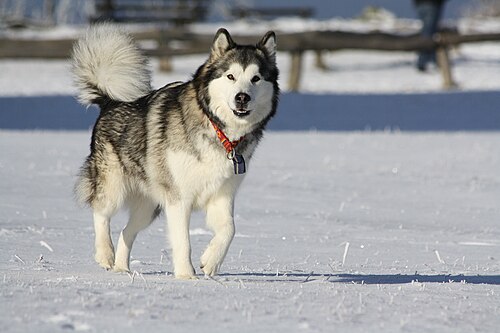
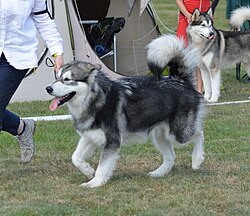
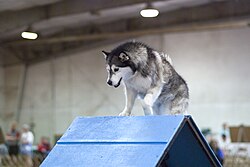
Alaskan Malamute
🧠 Temperament & character
The Alaskan Malamute is friendly, affectionate and playful, yet loyal and dignified – a sociable dog that loves the closeness of his people and his pack. As a watchdog he is of little use, since he usually greets strangers openly. At the same time he is headstrong, powerful and independent, with a pronounced drive to move, dig and hunt. He wants to be taken seriously as a partner, not commanded, which is why he needs patient, consistent leadership and plenty of shared activity.
📜 Origin & history
The Alaskan Malamute owes its name to the Mahlemut people, an Inuit group in north-west Alaska that has kept these dogs for centuries. As a powerful freight sled dog it transported heavy loads over long distances through the Arctic cold – pulling power and stamina were required, not racing speed. In this it differs clearly from the lighter, faster Siberian Husky. Later it also proved itself as a reliable draught dog on polar expeditions.
✂️ Grooming, care & training
The Alaskan Malamute has a dense, double stock coat that protects it from extreme cold and sheds heavily twice a year during the moult – then intensive, often daily brushing is necessary, and at least weekly all year round. Its need for exercise is enormous: it loves long hikes, pulling sports such as canicross or draught work, and needs both physical and mental occupation. It is intelligent but independent, which is why training demands patience, motivation and consistency. In warm weather caution is advised – the breed is sensitive to heat and needs shade and adapted activity.
🩺 Health
The Alaskan Malamute has a life expectancy of around 10 to 14 years. Typical of the breed are hip dysplasia, cataract and other eye diseases, as well as two hereditary conditions with available DNA tests: polyneuropathy and chondrodysplasia (a form of dwarfism). Hypothyroidism and gastric torsion also occur. Responsible breeders have the hips and eyes examined and use the DNA tests consistently to ensure healthy puppies.
🏡 Who is this breed right for?
The Alaskan Malamute suits very active, outdoor-loving people who can offer it plenty of daily exercise, tasks and close family involvement. For apartment living, exercise-shy people or inexperienced first-time owners it is unsuitable – without occupation it becomes frustrated and inventive. A house with a well and deeply secured garden (it likes to dig) is ideal. With children it is usually friendly and patient. In Switzerland it feels especially at home in the cooler regions and in the mountains; in summer it needs consideration for its sensitivity to heat.