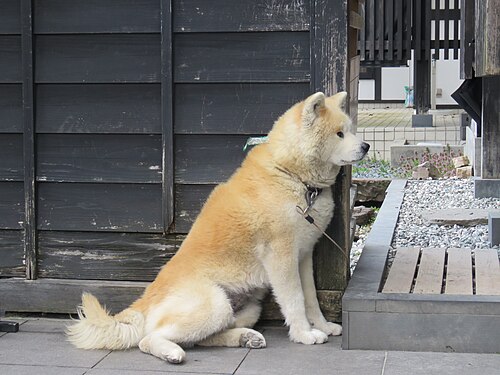
Akita
🧠 Temperament & character
The Akita is dignified, calm and deeply loyal, while being pronouncedly territorial and watchful. To his family he is faithfully devoted, but towards strangers and above all other dogs he is reserved to dominant. He is an independent thinker who does not obey on command but needs respectful, self-assured leadership and a close relationship of trust. Early, consistent socialisation is essential. Anyone who understands the quiet, proud nature of the Akita gains an unshakeably loyal companion.
📜 Origin & history
The Akita comes from the mountainous Akita Prefecture in northern Japan, where he was originally used to hunt big game such as bears and wild boar as well as being a guard dog. For centuries he was regarded as a noble dog whose ownership was at times reserved for the nobility; today he is protected in Japan as a natural monument. The breed became world-famous through Hachikō, who after the death of his master waited daily at Shibuya station for his return for nine years – a symbol of loyalty revered to this day.
✂️ Grooming, care & training
The Akita carries a dense, double stand-off coat that must be brushed regularly and sheds very heavily twice a year during the moult – then daily brushing is called for. His need for exercise is moderate but regular: extensive, calm walks and mental stimulation suit him better than hectic dog sports. In training, calm, consistency and mutual respect are decisive; harsh coercion is counterproductive with the proud Akita. Because of his independence and his territorial behaviour he belongs in experienced hands with clear, self-assured leadership.
🩺 Health
The Akita has a life expectancy of around 10 to 13 years and is considered predominantly robust. Breed-typical is a tendency towards autoimmune disorders, including certain skin and eye conditions, as well as towards hypothyroidism. Hip dysplasia and gastric torsion (a risk in large breeds) also occur. Responsible breeders have hips, eyes and thyroid examined and pay attention to lines free of autoimmune problems. In some Akitas a sensitivity to certain anaesthetics should also be noted.
🏡 Who is this breed right for?
The Akita suits calm, self-assured and dog-experienced people who value his independent, dignified nature and meet him with respect rather than pressure. For first-time owners, uncertain leadership or hectic households he is not suitable. He needs space, clear structures and a close bond; a house with a well-secured garden is ideal. With well-socialised family children he can be a reliable companion, but because of his intolerance of fellow dogs and his territorial behaviour he belongs in responsible, experienced hands.